
Notes, Rests, and Rhythm Made Simple
226 views
You tap your foot. Count carefully. Then somehow you still come in too early.
Almost everyone who starts learning music runs into this problem. Reading notes isn't usually the hardest part. Timing is. A page filled with quarter notes, eighth notes, rests, dots, and strange-looking symbols can feel less like music and more like solving a puzzle under pressure.
I've watched beginners confidently play every correct pitch... while the rhythm quietly falls apart. I've done it myself. Years ago, I thought I had a song mastered until I played alongside a metronome. It wasn't even close.
The good news? Rhythm isn't mysterious. It's a skill you build through repetition, careful listening, and a bit of patience. Once the basic pieces click together, written music starts making much more sense.
Think of rhythm as the heartbeat
Before worrying about notes, imagine someone walking at a steady pace. Left. Right. Left. Right.
That's a pulse.
Music depends on a pulse in much the same way. Some songs move slowly, others race ahead, but underneath there's usually a steady beat that keeps everything connected.
Notes tell you what to play.
Rhythm tells you when to play it.
Miss the rhythm, and even beautiful melodies sound awkward.
Meet the most common note values
A note's shape tells you how long it lasts relative to the beat. The exact timing depends on the time signature and tempo, but these basic relationships stay consistent.
Note | Typical Value (4/4 Time) |
|---|---|
Whole note | 4 beats |
Half note | 2 beats |
Quarter note | 1 beat |
Eighth note | 1/2 beat |
Sixteenth note | 1/4 beat |
At first glance, the symbols seem unrelated. They aren't.
Think of them like cutting a pizza.
One whole pizza becomes two halves.
Each half becomes two quarters.
Each quarter becomes two eighths.
The pattern continues. Every smaller value divides the previous one evenly.
That simple relationship explains most beginner rhythms.
Silence has a job too
Many new musicians ignore rests because, well, nothing happens.
Actually, something very important happens.
You intentionally don't play.
A rest lasts for the same amount of time as its matching note value.
Whole rest = 4 beats
Half rest = 2 beats
Quarter rest = 1 beat
Eighth rest = 1/2 beat
Sounds easy.
Until you're counting.
People often rush through rests because silence feels empty. Resist that urge. Those silent moments create space, tension, and breathing room. Without them, music quickly turns into one long stream of sound.
Professional players count rests just as carefully as they count notes.
Why counting out loud actually works
It feels awkward.
Nobody enjoys sitting alone saying "one and two and three and four and..."
Do it anyway.
Counting out loud forces your brain to connect written notation with physical timing. Instead of guessing where notes belong, you hear and feel their placement.
A basic counting system looks like this:
Quarter notes: 1 2 3 4
Eighth notes: 1 and 2 and 3 and 4 and
Sixteenth notes: 1 e and a 2 e and a
After enough repetition, you won't need to say every count aloud. The rhythm becomes internal.
That's the goal.
Time signatures aren't as scary as they look
You'll often see numbers like 4/4, 3/4, or 6/8 at the beginning of a piece.
Many beginners think they're fractions.
They're really instructions.
The top number tells you how many beats are grouped together in each measure.
The bottom number tells you which note value receives one beat.
4/4 time
This is the rhythm most people hear every day.
Count:
1 2 3 4
Then repeat.
Pop, rock, country, and countless classical pieces use it.
3/4 time
Instead of four beats, each measure contains three.
Think of a waltz.
1 2 3
1 2 3
The repeated three-beat pattern creates its distinctive swaying feel.
6/8 time
This one confuses beginners because counting every eighth note isn't always helpful.
Instead of hearing six equal beats, musicians often feel it as two larger pulses.
ONE two three FOUR five six.
Once you hear that grouping, the notation becomes much easier to understand.
Dots change everything
A tiny dot beside a note makes a surprisingly big difference.
It increases the note's duration by half of its original value.
Examples:
Half note (2 beats) becomes 3 beats.
Quarter note (1 beat) becomes 1½ beats.
Eighth note (½ beat) becomes ¾ beat.
At first I constantly forgot the extra half beat. I'd release the note too early every single time.
The fix wasn't memorizing formulas.
It was counting carefully while practicing slowly.
Ties and slurs aren't the same thing
These markings look similar but serve different purposes.
A tie connects two notes of the same pitch, combining their durations into one longer note.
A slur connects different notes and tells the performer to play them smoothly without noticeable separation.
Tiny visual difference.
Very different musical meaning.
Confusing them is one of the most common reading mistakes among beginners.
Tempo changes the feel, not the relationships
Imagine clapping quarter notes.
Now clap faster.
The notes arrive more quickly, but each quarter note still lasts exactly one beat.
Tempo simply changes the speed of those beats.
A metronome measures tempo in beats per minute (BPM).
Some useful reference points include:
Tempo | Approximate BPM | Feel |
|---|---|---|
Largo | 40–60 | Very slow |
Andante | 76–108 | Walking pace |
Moderato | 108–120 | Comfortable |
Allegro | 120–168 | Fast and energetic |
Many beginners increase speed before their rhythm is reliable.
That's backwards.
Consistency comes first.
Speed follows naturally.
Practice rhythm without your instrument
This surprises people.
Some of the best rhythm practice doesn't involve playing at all.
Try this simple routine:
Set a metronome between 60 and 70 BPM.
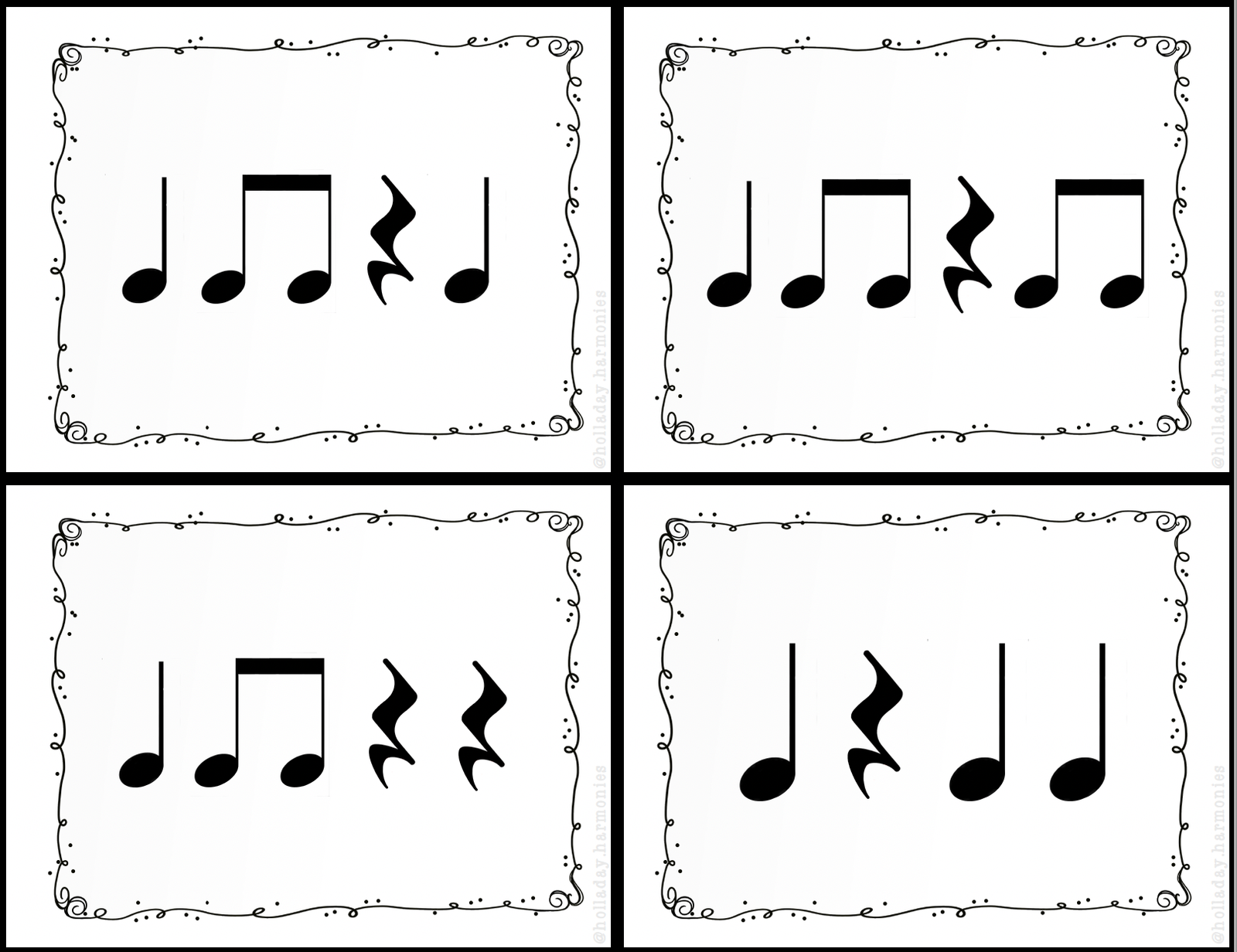
Clap or tap simple rhythms while counting aloud.
Once that feels comfortable, transfer the exact rhythm onto your instrument.
Separating rhythm from technical playing reduces mental overload. Instead of worrying about finger positions, breathing, bowing, or picking, your brain focuses on timing alone.
The improvement is usually noticeable within a few practice sessions.
Common rhythm mistakes beginners make
Nobody escapes these entirely.
They simply become less frequent with experience.
Looking ahead instead of staying present
Eyes jump several measures forward.
Hands follow.
Suddenly the beat disappears.
Read slightly ahead, but keep your attention anchored to the current measure.
Ignoring the metronome
Practicing without one often hides inconsistent timing.
The metronome doesn't criticize.
It simply tells the truth.
Stopping after every mistake
This habit breaks your internal pulse.
Instead, keep counting and continue playing. Even professionals recover from errors without stopping the performance.
Guessing difficult rhythms
Slow them down.
Way down.
Playing accurately at half speed builds better timing than repeatedly struggling at full tempo.
Rhythm is something you feel
Music notation isn't just math on paper.
The symbols eventually become sounds in your imagination.
You'll start recognizing familiar rhythmic patterns before consciously counting them. That's similar to reading language. You probably don't spell every word letter by letter anymore. Your brain recognizes complete patterns.
Rhythm develops the same way.
Slowly.
Then all at once.
Quick ways to improve faster
Different musicians swear by different routines, but a few habits consistently produce results:
Practice difficult rhythms separately before combining them with melodies.
Count aloud during new pieces, even if it feels awkward.
Record yourself occasionally. Tiny timing errors become much easier to hear afterward.
Listen actively to experienced performers rather than only reading notation.
Work in short, focused sessions instead of marathon practice that leads to careless repetition.
Small improvements accumulate. A few accurate minutes every day often beat an hour of distracted practice.
Frequently Asked Questions
Do I need a metronome as a beginner?
Yes. It helps develop consistent timing and quickly reveals places where you naturally speed up or slow down. Many free metronome apps work perfectly well.
What's the easiest time signature to learn first?
Most teachers begin with 4/4 because it's common across many musical styles and provides a straightforward counting pattern.
Why do rests matter if no sound is played?
Silence shapes musical phrases, creates contrast, and keeps performers synchronized. A missed rest changes the rhythm just as much as a wrong note.
How long does it take to become comfortable reading rhythm?
It varies widely, but regular daily practice usually produces noticeable improvement within several weeks. Reading fluently takes longer, especially as rhythms become more complex.
Should I master rhythm before learning melodies?
Not completely. Practice both together, but if a passage feels overwhelming, isolate the rhythm first. Once the timing feels natural, adding pitches becomes much easier.
Keep the beat moving
The next time you open a piece of sheet music, don't rush to identify every note name first. Find the pulse. Count the beats. Notice the rests. Let the rhythm settle into your hands before worrying about speed. A steady beat gives every melody a solid foundation, and each practice session makes that foundation a little stronger.
note values explained
rhythm basics for beginners
counting music notes
beginner rhythm exercises
rests in music theory
music timing guide
Found this helpful? Share it!