
How to Write a Song Using Music Theory (Beginner Guide)
518 views
You’ve got a melody stuck in your head. You sit at the piano or open your DAW, play a few chords, and suddenly the idea disappears.
Annoying.
The problem usually isn’t a lack of creativity. It’s that you don’t yet have a simple system for turning an idea into a complete song.
Music theory can provide that system.
You don’t need to read complicated scores, memorize hundreds of chords, or become a jazz pianist first. A handful of concepts—key, scale, intervals, chord function, melody, rhythm, and song structure—can take you surprisingly far.
This guide takes a slightly different route from a basic songwriting walkthrough: instead of simply telling you what to do next, it shows how music theory connects each songwriting decision. That makes it a useful companion to Melody Beats’ existing guides on chords, melodies, hooks, and composition.
Start with one musical idea, not an entire song
Before choosing chords, decide what the song is trying to communicate.
Maybe the feeling is nostalgic. Maybe it’s restless, euphoric, intimate, angry. Write that down in one sentence.
Then make a tiny musical sketch.
A four-note vocal phrase is enough. So is a two-bar piano riff. You can even record yourself humming into your phone.
Don't try to write verse, chorus, bridge, bass line, drums, and lyrics simultaneously.
That creates too many decisions at once.
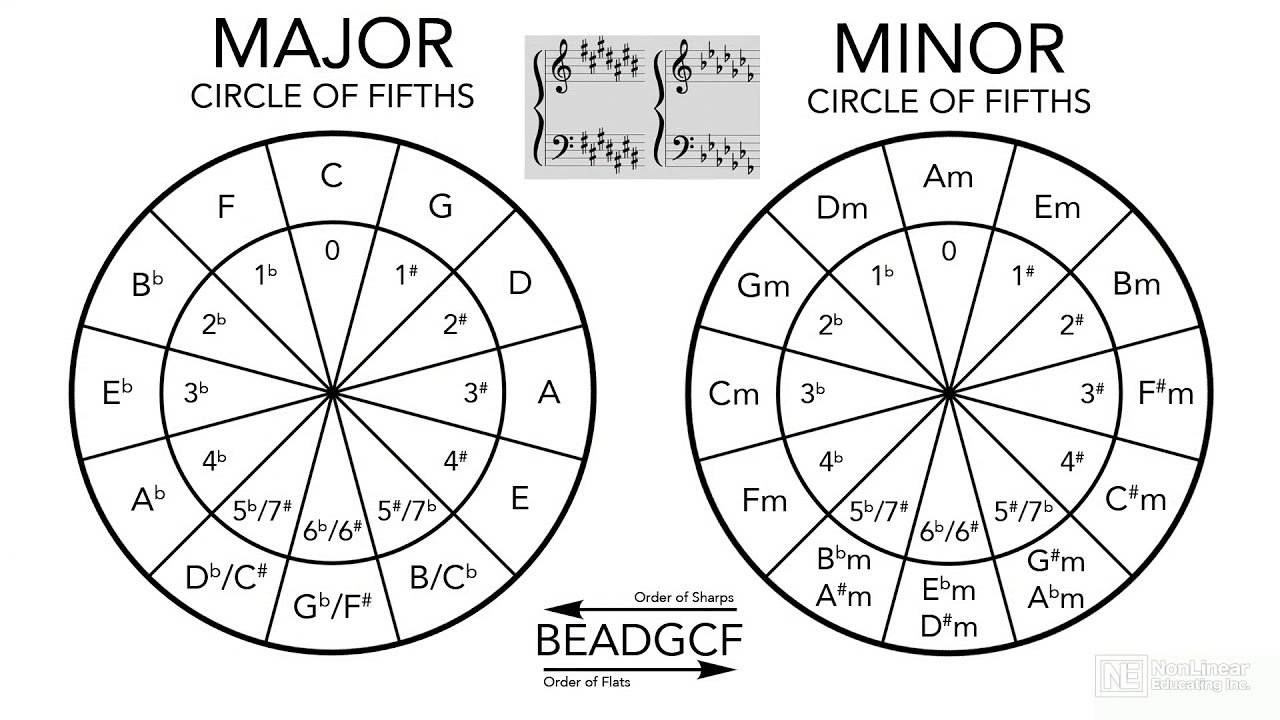
Instead, take your little idea and ask one useful theory question: what key does this idea seem to belong to?
If your notes strongly suggest C major, for example, the C major scale gives you seven basic notes:
C – D – E – F – G – A – B
Those notes become your initial musical vocabulary. You can deliberately step outside it later.
This is essentially the same principle behind DAW scale tools. Ableton Live's Scale device, for instance, can map incoming MIDI notes into a selected scale, making it easier to experiment without constantly checking which notes belong to the key.
Pick a key, then build your chord family
Once you have a key, the next step becomes much easier.
In a major key, each scale degree can be used as the root of a triad. In C major, that gives you:
Scale degree | Chord | Roman numeral |
|---|---|---|
C | C major | I |
D | D minor | ii |
E | E minor | iii |
F | F major | IV |
G | G major | V |
A | A minor | vi |
B | B diminished | vii° |
You don't need to memorize all seven immediately. Start with I, IV, V, and vi.
Those four chords alone give you an enormous songwriting playground. Berklee's songwriting material similarly highlights I, IV, V, and vi as foundational harmonic material and emphasizes that simple progressions can become distinctive through melody, rhythm, arrangement, and chord treatment.
Try this in C major:
C – G – Am – F
That's:
I – V – vi – IV
Play it slowly. Then faster. Change the rhythm. Hold the first chord for two bars. Repeat it.
Same notes. Different song feel.
That's one of the first important songwriting lessons: the theory gives you possibilities; the musical decisions give those possibilities personality.
Use chord function to create movement
Roman numerals become more useful when you stop treating chords as isolated objects.
In a major key, chords often have different jobs.
Tonic feels like home.
Predominant tends to move away from home.
Dominant creates tension that often wants to return.
The classic example is:
I → IV → V → I
In C major:
C → F → G → C
The G chord creates a strong pull toward C.
You don't have to use this progression every time. In fact, don't.
But understanding the pull helps you deliberately create tension and release instead of randomly cycling through chords until something sounds acceptable.
Try stopping on G instead of resolving to C.
It feels unfinished.
Now play C.
There it is.
That tiny moment of expectation is one of the basic engines of tonal songwriting.
Write the melody against the chords
Here's where theory becomes genuinely practical.
Suppose your progression is:
C | G | Am | F
Don't simply throw scale notes over it.
Start by identifying the chord tones.
For C major:
C – E – G
For G major:
G – B – D
For A minor:
A – C – E
For F major:
F – A – C
Notes belonging to the current chord will often sound stable when they land on strong beats. Notes outside the chord can create movement, tension, or color.
That's the trick.
Stable notes give the melody somewhere to stand. Non-chord tones give it somewhere to go.
A beginner-friendly exercise is to write a melody using mostly chord tones, then add one or two scale notes between them.
For example, over C major, you might sing:
E – G – A – G – E
The A isn't part of the C major triad, but it belongs to the C major scale. It creates a little lift before returning to a chord tone.
This approach is much more useful than the vague advice to “just play notes in the key.”
Ableton's own music-theory teaching materials use the same basic workflow: scales provide melodic material, while chord tools can help turn those notes into harmonic accompaniment.
Make rhythm do some of the songwriting
Pitch gets most of the attention.
Rhythm deserves more.
Take the exact same five notes and change their timing. The melody can suddenly sound like a completely different idea.
Start with a four-bar rhythm. Clap it before adding pitches.
Try something simple in 4/4:
1 – & – 3 – 4
Then leave a little silence before the next phrase.
That gap matters.
Melody Beats' existing work on rhythm and time signatures explains the basic 4/4 framework, but the songwriting application is what beginners often miss: rhythm isn't merely the grid underneath a melody. It is part of the melody's identity.
A useful exercise:
Speak your lyric naturally.
Notice which syllables you naturally emphasize.
Turn those stresses into rhythmic accents.
Only then decide which pitches carry them.
This prevents a common beginner problem: lyrics that sound natural when spoken but awkward when sung.
Build contrast between verse and chorus
A song becomes easier to follow when its sections behave differently.
You don't necessarily need a completely new chord progression.
Contrast can come from several places:
Register: keep the verse lower, then raise the chorus.
Rhythm: use busier verse phrasing and longer chorus notes.
Harmony: introduce a different chord or progression.
Dynamics: strip the verse down and expand the chorus.
Melodic range: make the chorus physically reach higher notes.
Density: add bass, drums, backing vocals, or harmony.
This is particularly useful because Melody Beats already covers hooks and pop-melody construction separately. Here, theory becomes the connective tissue: harmonic tension, scale degrees, rhythm, and melodic contour can all help distinguish sections without making the song feel like two unrelated pieces.
Try this miniature architecture:
Verse: Am – F – C – G
Pre-chorus: F – G
Chorus: C – G – Am – F
The chords aren't complicated.
The arrangement and melody can make them feel enormous.
Use inversions before adding complicated chords
Beginners often think the answer to a boring progression is a more sophisticated chord.
Sometimes it is.
Often, it isn't.
Try changing the voicing instead.
A C major chord can be played as:
C–E–G
or first inversion:
E–G–C
or second inversion:
G–C–E
The chord's basic identity hasn't changed, but the movement between chords can become smoother.
That's especially helpful on piano.
Instead of jumping from C to F with your entire hand, look for nearby notes. Smooth voice leading can make a basic four-chord progression sound far more polished.
Modern DAWs make this kind of experimentation easier. Ableton Live 12's MIDI tools include a Stacks generator for creating chords and progressions within a selected scale, with controls for chord roots, duration, and inversions.
Logic Pro also has a dedicated Chord track with tools for creating, editing, transposing, and arranging chord progressions.
Use those features as training wheels, not as a substitute for listening.
Add one deliberate “wrong” note
Staying perfectly inside a scale can make your first songs sound predictable.
That's not a disaster. It's actually a useful starting point.
Once the basic melody works, experiment with one note outside the key.
Maybe raise the fourth degree. Maybe use a chromatic passing tone. Maybe borrow a chord from the parallel minor.
But make the choice deliberate.
If you're in C major and briefly use F♯ before resolving to G, the resulting tension can make the G chord feel stronger. You don't need to understand every advanced harmonic label before trying it.
Your ears come first.
Theory explains what happened afterward.
That's a healthier learning loop than refusing to experiment until you've memorized a textbook.
A complete beginner songwriting exercise
Let's turn everything into one small project.
Step 1: Choose a key
Use C major.
No sharps. No flats. Easy to visualize on a keyboard.
Step 2: Set a tempo
Try 96 BPM in 4/4.
Not because 96 BPM is magical. It simply gives you enough room for a relaxed groove.
Step 3: Create four chords
Use:
C – G – Am – F
Give each chord one bar.
Step 4: Write a four-bar melody
Begin with chord tones. Keep the range comfortable.
For the chorus, let the melody climb higher than the verse.
Step 5: Add lyrics
Don't force every syllable into equal rhythmic spaces. Let important words receive longer notes or stronger beats.
Step 6: Change the second section
Keep the same progression if you like, but alter the melody's rhythm and range.
That's enough to create contrast.
Step 7: Add arrangement
Start with piano or guitar.
Then add bass.
Then drums.
Only after the core song works should you start stacking pads, synths, harmonies, effects, and decorative parts.
If the song doesn't work with one instrument, more plugins probably won't rescue it.
Don't let the DAW write the song for you
Modern software can remove a lot of friction.
That's useful—and slightly dangerous.
Ableton Live's Scale Mode can highlight notes belonging to a selected scale, while Logic Pro can quantize MIDI notes to a chosen key or scale. Apple's Flex Pitch can also quantize recorded monophonic audio to a selected scale.
Those features are excellent for experimentation and correction.
But there's a catch.
If you quantize everything immediately, you can erase the little imperfections that made the original phrase interesting.
Record the rough vocal. Keep the slightly late note. Listen before fixing it.
Sometimes the mistake is the hook.
Five common questions beginners ask
Do I need music theory to write songs?
No. Plenty of songwriters work primarily by ear. Theory simply gives you a vocabulary for understanding and reproducing things you hear.
Should I write chords or melody first?
Either works. If you naturally hum melodies, start there. If you play piano or guitar, chords may be the faster entry point. Try both approaches and notice which produces better ideas for you.
What's the easiest key for a beginner?
C major is convenient on piano because it uses only the white keys. But the “easiest” key for a vocalist is the one that fits their comfortable range.
How many chords should a beginner use?
Start with three or four. A strong melody over a simple progression is more valuable than a complicated progression supporting a weak melody.
Can I use the same chord progression as another song?
Yes, chord progressions themselves aren't exclusive songwriting property. What you shouldn't copy is the distinctive melody, lyrics, recording, or other protected expressive material. Berklee's songwriting guidance also emphasizes studying existing progressions as a way to understand harmonic possibilities.
Your next song should be smaller
Don't make your next goal “write an amazing song.”
Make it:
Write one 16-bar idea using one key, four chords, and a melody you can sing from memory.
That's manageable.
Then change one thing.
Move the melody higher. Replace one chord. Reverse the progression. Cut the drums. Add a borrowed chord. Rewrite the rhythm.
You’ll start hearing theory differently once you're using it to solve real musical problems rather than memorizing definitions.
And that is the point of learning music theory as a songwriter: not to make your music sound theoretical, but to give you more control when your ears already know what they want.
songwriting for beginners
music theory basics
how to write a song
beginner songwriting guide
songwriting tips
Found this helpful? Share it!